Florida Homeowner Insurance: The Good, The Bad, and How to Cut Your Bill
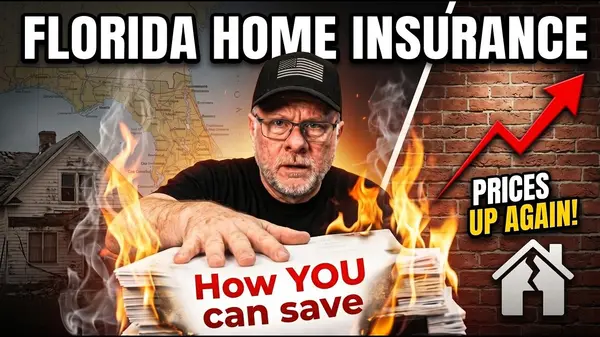
Florida homeowners insurance is easily the number one issue blowing up real estate transactions across the state. Premiums have doubled or tripled, causing buyers to walk away from homes they truly love.
To get past the rumors and find out what is actually happening behind the scenes, I sat down on Bruce Woodburn's Loan Arranger radio show with Florida Insurance Commissioner Michael Yawarski. As the official running Florida's insurance regulatory system, he shared what triggered this crisis, the legislative reforms currently stabilizing the market, and practical steps homeowners can take right now to lower their annual bills.
https://youtu.be/fycsZ1INFWs?si=z_4rzlQozsvZn1w7
Why Florida Insurance Got Out of Control
Florida has always possessed a unique risk profile. As Commissioner Yawarski pointed out, our state holds $10 trillion in property value and 23 million residents living on a narrow peninsula exposed to coastal storms. However, natural storm risk was not the primary driver that caused rates to explode starting around 2015 and 2016.
The genuine crisis stemmed from unchecked litigation and social inflation. Pre-reform data illustrates the severity of that imbalance: in 2019, Florida accounted for just 8% of all property insurance claims in the entire United States, yet generated 76% of all property claim lawsuits nationwide.
This environment was fueled by Florida's historical one-way attorney fee statute. Intended as a consumer protection, it created unintended consequences by forcing insurers (and ultimately everyday policyholders) to pay all plaintiff legal fees whenever an insurer lost. This incentivized abusive, bad-acting trial attorneys to litigate claims aggressively.
To prevent a total collapse of the private insurance market, Florida passed major reforms:
- Repealed the one-way attorney fee statute in 2022.
- Eliminated assignment of benefits (AOB) abuses.
- Established statutory protections regarding older roofs.
Why Rates Have Not Dropped Overnight
If legal reforms passed, why have premiums not dropped across the board immediately?
Commissioner Yawarski clarified a critical distinction between rates and premiums. The state sets the underlying rate, meaning the base cost per "brick" of rebuilding coverage. The premium is that rate multiplied by the total replacement value of the home.
Between 2020 and 2024, inflationary pressures caused the average total insured value of Florida properties to nearly double. Higher costs for building materials, replacement goods, and labor raised the replacement cost of homes. Even as underlying risk metrics improve, general inflation keeps rebuilding expenses high.
3 Action Steps to Lower Your Premium This Year
Despite broader economic pressures, you do not have to accept sky-high premiums passively. Homeowners can take three specific actions to cut their expenses.
1. Claim Your Wind Mitigation Discounts (Form 1802)
Florida law requires insurance carriers to provide discounts for specific hurricane-resistant structural features. Scheduling an official Uniform Mitigation Verification Inspection (Form OIR-B1-1802) documents features such as roof deck attachments, roof geometry, and opening protections. Completing a wind mitigation inspection on my own home dropped my annual insurance bill by roughly $6,000.
2. Apply for the My Safe Florida Home Program
The state-backed My Safe Florida Home program offers eligible homeowners a free wind mitigation inspection along with matching grants up to $10,000 (providing two state dollars for every one homeowner dollar). These funds go directly toward hardening doors, windows, and roofs. If you qualify, submit your application before allocated program funds are depleted.
3. Enforce the 5-Year Roof Life Certification Law
Insurers frequently refuse to renew policies on homes with asphalt shingle roofs over 10 to 15 years old, despite the roof being in functional condition. Under a 2022 Florida reform law, an insurer cannot refuse to issue or renew a homeowners insurance policy solely because of roof age if an authorized inspection certifies the roof has at least five years of remaining useful life. Knowing this legal right has protected clients from paying $25,000 for premature roof replacements.
Understanding Deductibles and Claims
Homeowners often avoid filing legitimate claims out of fear that their policies will be canceled or their rates will immediately skyrocket. Filing an individual claim does not automatically raise your premium.
For hurricane damage, remember that Florida hurricane deductibles apply per calendar year rather than per individual storm. If your home sustains minor damage that does not exceed your deductible in an initial storm, filing that claim still establishes your losses. Should a second storm strike during the same calendar year, your repair costs stack toward satisfying that single annual deductible.
Moving Beyond Citizens Property Insurance
Citizens Property Insurance Corporation serves as Florida's state-backed insurer of last resort. During peak market disruptions, Citizens ballooned to 1.4 million policies. That high concentration created risk for all Floridians, because any catastrophic deficit would result in state-wide emergency assessments.
As private insurance capital returns to Florida, Citizens has depopulated significantly and is no longer the state's largest insurer. If you are currently insured through Citizens and receive a private market takeout offer within 20% of your Citizens premium, state rules require you to transition back to the private sector.
Shop Your Policy Annually
Both Commissioner Yawarski and I share the same rule of thumb: shop your coverage every single year. Do not allow an agent to roll over your policy automatically without reviewing market alternatives. If your insurance agent refuses to re-quote your policy annually, find an independent agent who will.
While Florida will never be the cheapest state to insure due to geography, you can actively reduce your overhead by knowing your statutory rights, securing your mitigation credits, and shopping your options.
📘 Download the Sunshine State Handbook: https://floridarealestateinsider.com/vip-pass
If you are buying, selling, or relocating to Florida and navigating homeowner insurance questions, reach out directly to set up a consultation.
Categories
Recent Posts