Florida’s Tax Bomb: The 9% Sales Tax vs. Total Property Tax Abolition
They thought you wouldn’t notice. On December 17th—just eight days before Christmas—the state of Florida finally put the real numbers on paper regarding the future of your money. For months, we have been talking about concepts and menus, but the guessing game is officially over. The bill is filed, and it represents the most radical change to personal finance in Florida history.
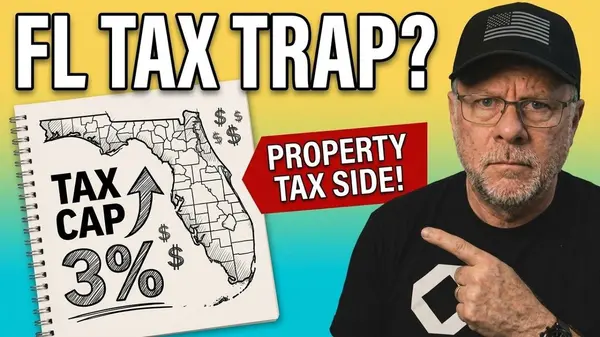
The offer on the table is bold: a proposal to raise the State Sales Tax to 9% and implement a 5% "Exit Tax" on the sale of your home. In exchange, the state would completely delete the property tax system. This isn't just a small discount; we are talking about the total abolition of city taxes, homestead taxes, and taxes on rental properties and businesses. It is the "Nuclear Option" known as the Freedom School and Safety Revenue Replacement Act.
The War of the Bills: Plan A vs. Plan B
Currently, two different plans are fighting for survival in Tallahassee. Understanding the difference is critical for every homeowner and renter in the Sunshine State.
Plan A (The Safe Bet - HJR 201) This is the establishment's preferred route. It removes non-school taxes for homesteads only. Under this plan, you still pay school taxes, and there is no relief for business owners or landlords. The sales tax remains at 6%. It is a half-measure that keeps the system—and the government’s lien on your house—firmly in place.
Plan B (The Nuclear Bomb - HB 791 and HJR 787) This is the plan filed by Rep. Ryan Chamberlin on December 17th. It removes the authority for local governments to levy property taxes entirely. The cost is a 9% State Sales Tax and a 5% fee when you sell your property. This plan changes the definition of homeownership in Florida.
Exposing the Math: Winners and Losers
To understand if this is a "slam dunk" or a "trap," we have to look at the numbers for different lifestyles.
- The Typical Family: A family earning $90,000 might see their sales tax expenses rise by $810 a year. However, if they own a median home worth $425,000, they could save roughly $5,500 in property taxes. That is a net win of $4,700 annually.
- The Renter: Renters face immediate pain. A single person might pay an extra $540 a year in sales tax with zero immediate benefit. While economists argue that landlords might eventually lower rents due to dropped costs, that adjustment could take 12 to 24 months.
- The Retiree: A couple on a fixed income might save $3,300 a year in taxes but could be hit by the "Exit Tax."
The 5% Exit Tax and the "Lock-In" Effect
HB 791 creates a 5% Property Sales Surtax. If you sell a $500,000 home, you owe $25,000 at closing. For a retiree saving $3,300 a year, a move within three years due to health or downsizing would actually result in a net loss. This creates a massive "Lock-In Effect" where inventory could vanish because the cost of selling becomes too high.
The Balloon Squeeze: Fees vs. Taxes
There is a dangerous loophole in HJR 787. While it removes "Ad Valorem" taxes (based on value), it does not explicitly ban "Non-Ad Valorem Assessments." This means your city could lose its property tax revenue and immediately replace it with flat "Public Safety Assessment Fees" for fire or police services. We could end up paying a 9% sales tax and a new $1,500 flat fee.
The Timeline for 2026
The clock is ticking.
- January 13, 2026: Legislative Session begins.
- March 13, 2026: The "Hanky Drop" (End of Session).
- November 3, 2026: Election Day (Voters must approve by 60%).
We cannot cut our way to abolition; the math requires a tax swap. If you want true ownership, you must speak up now. Use my 2026 Tax Reform Action Pack to contact the Ways & Means Committee and demand that they cap non-ad valorem fees and stop giving us half-measures.
Categories
Recent Posts